Industries

Aerospace
Improve the safety, reliability, and efficiency of aircraft and spacecraft, minimize the cost of repairs by detecting potential areas of failure early in the design phase.
Learn more
Automotive
Optimize weight and strength of vehicle components, improve crash safety and vehicle stability, reduce development time and costs.
Learn more
Construction
Predict the behavior of materials and structures over time, detect potential problems early in the design phase.
Learn more
Energy
Assess the risk of fractures in energy equipment, such as pipelines and wells, reduce the likelihood of failure and promoting safety.
Learn more
Manufacturing
Minimize the cost of repairs and reduce the likelihood of costly production shutdowns, increase customer satisfaction and build a positive reputation.
Learn more
Academic
Conduct cutting-edge and interdisciplinary reasearch, contribute to the development of new technologies and materials.
Learn moreWhat Pmass Can Solve
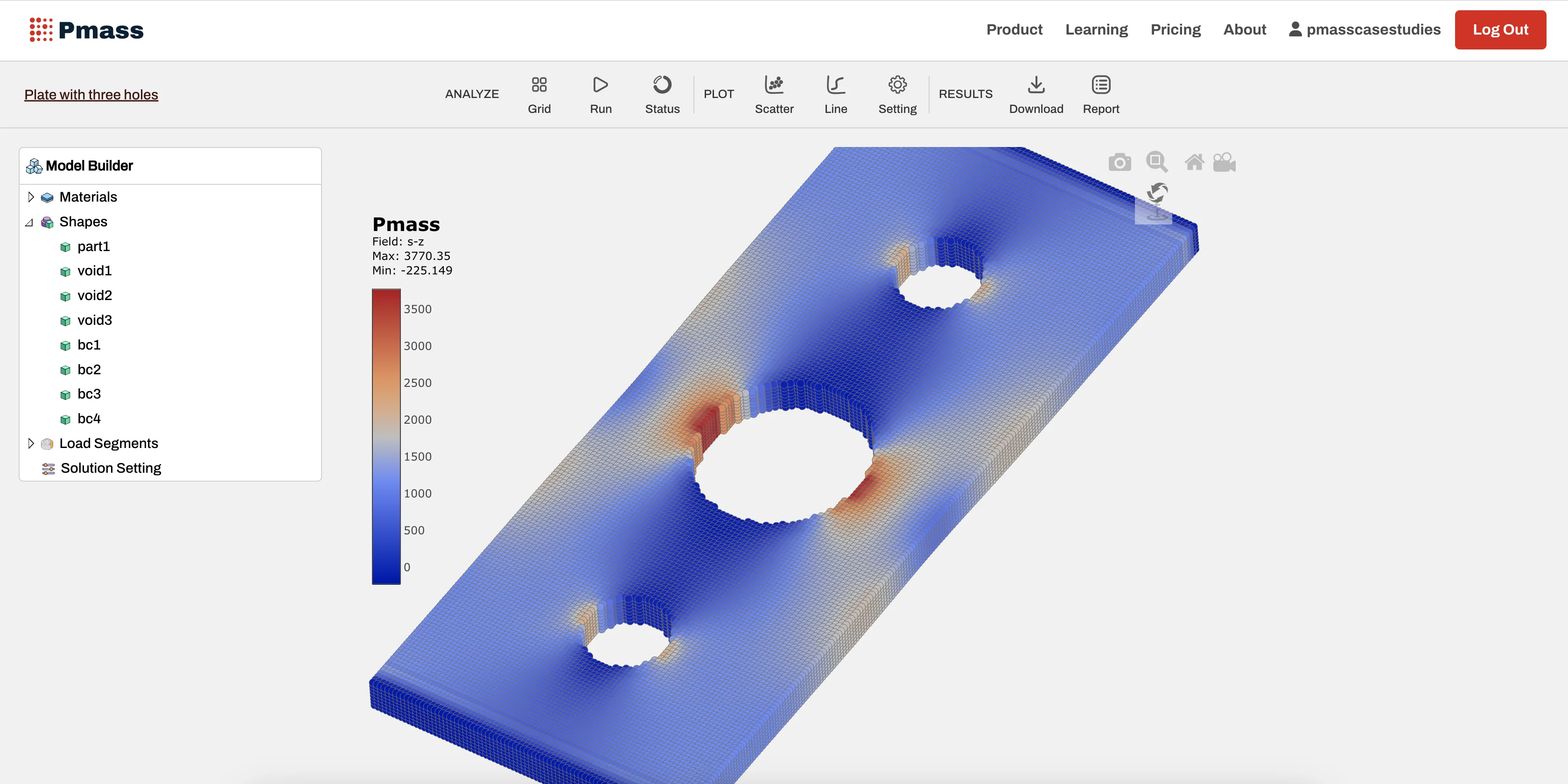
Stress Analysis
Pmass supports both linear and nonlinear static stress analysis, allowing users to evaluate stress and strain distributions in complex geometries under various loading conditions. Leveraging the nonlocal nature of peridynamics, it accurately captures stress concentrations around notches, holes, and material discontinuities. This makes it a powerful tool for structural integrity assessments and design validation.
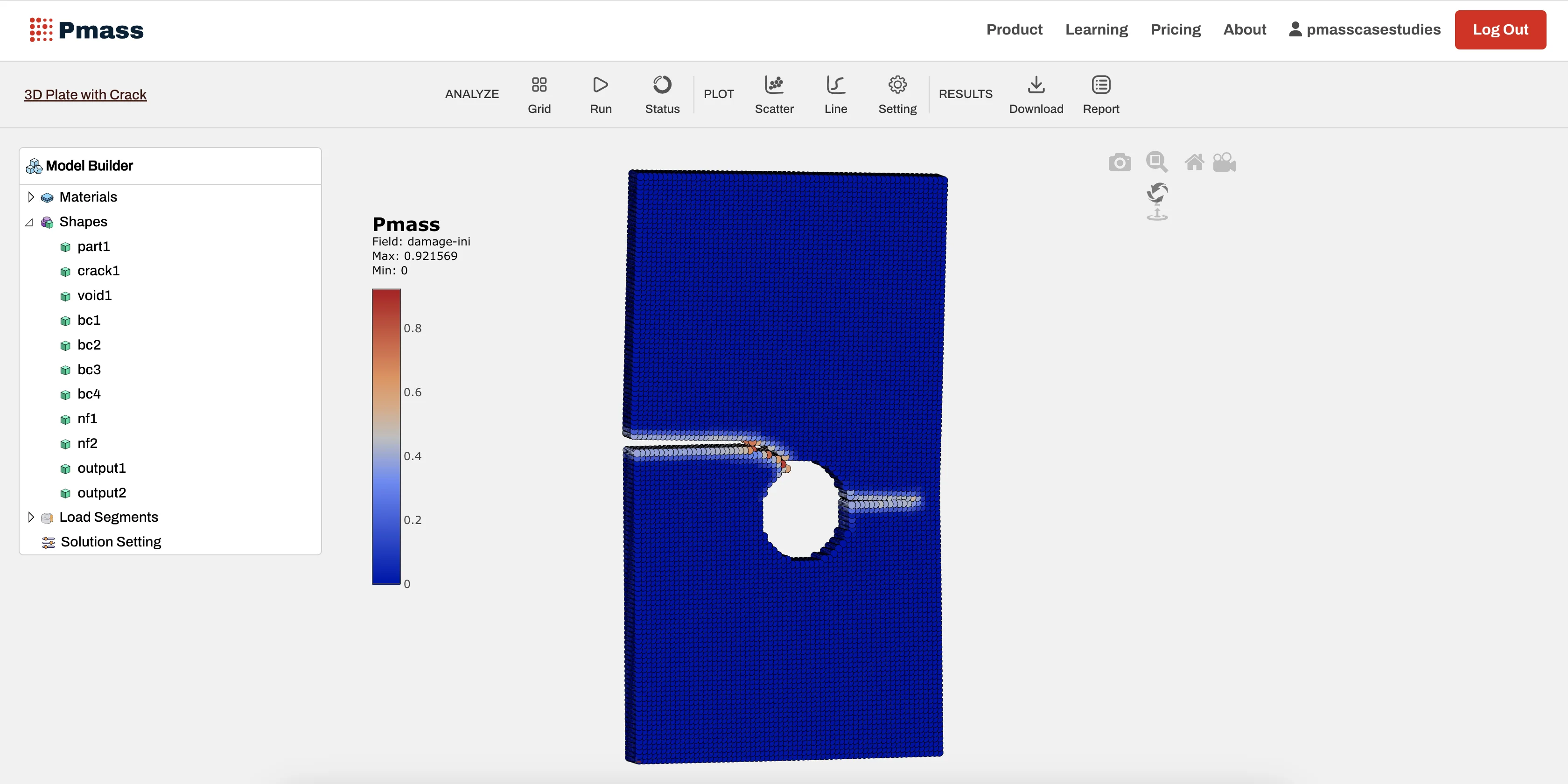
Fracture Analysis
Built on the peridynamic theory, Pmass inherently models material damage and fracture without requiring pre-defined crack paths or special treatments. It simulates crack initiation, propagation, and interaction under both quasi-static and dynamic conditions, including mixed-mode fracture. This enables robust failure analysis of structures subjected to real-world loading scenarios.
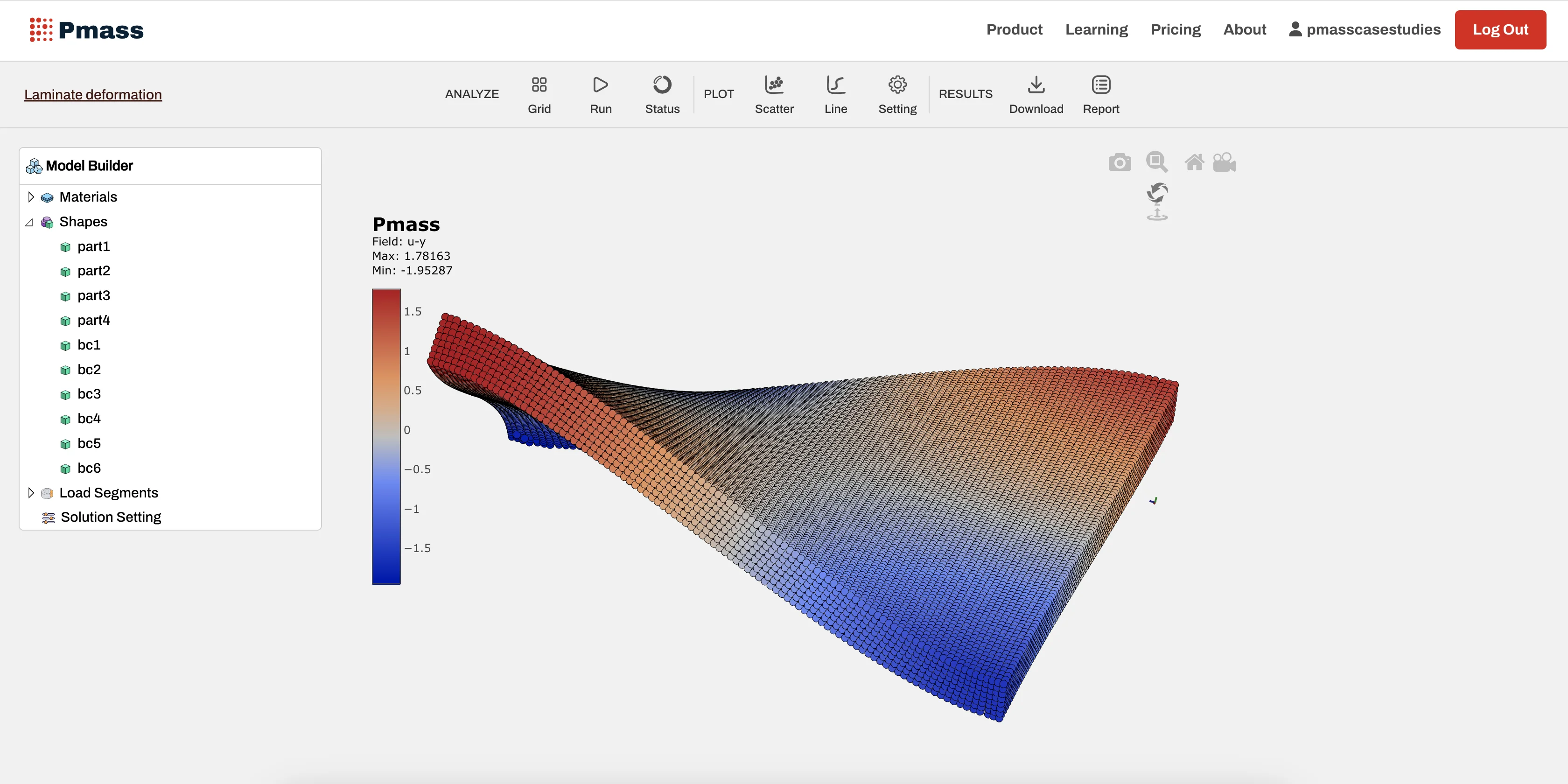
Composite Materials
Pmass offers versatile capabilities for simulating a wide range of composite materials. Users can model fiber-reinforced laminates with orthotropic properties or analyze particle-reinforced composites. Advanced failure models, such as the Hashin criteria, are integrated to capture matrix cracking, fiber breakage, and delamination. This flexibility makes Pmass suitable for both aerospace-grade and consumer-level composite systems.
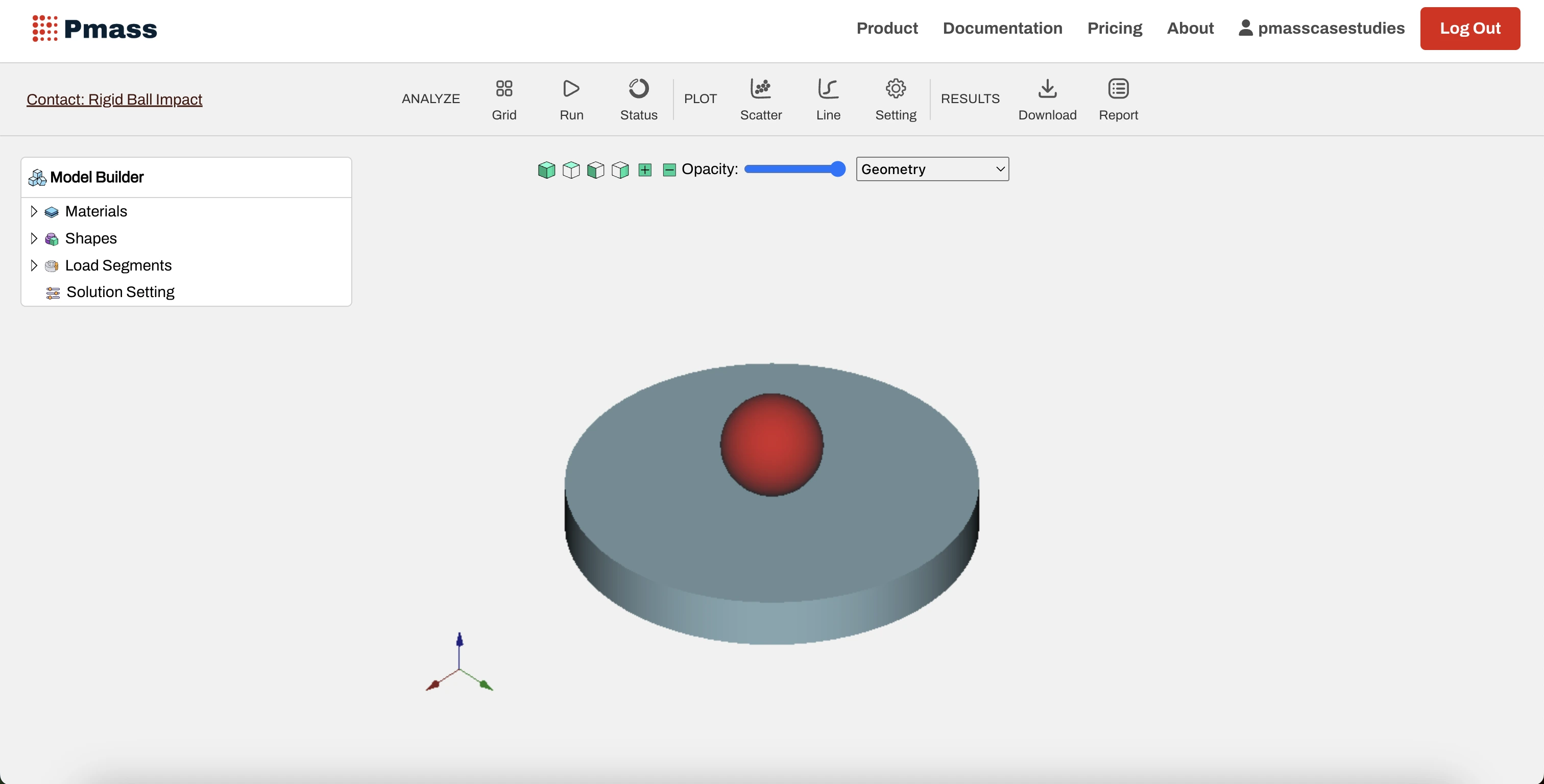
Impact Analysis
With its strong foundation in peridynamics, Pmass excels in simulating high-velocity impacts and dynamic events. It captures damage evolution, wave propagation, and material failure during ballistic impacts or drop tests. Whether you’re evaluating protective structures, crash scenarios, or projectile penetration, Pmass provides accurate insights into impact response and energy dissipation.
Topology Optimization
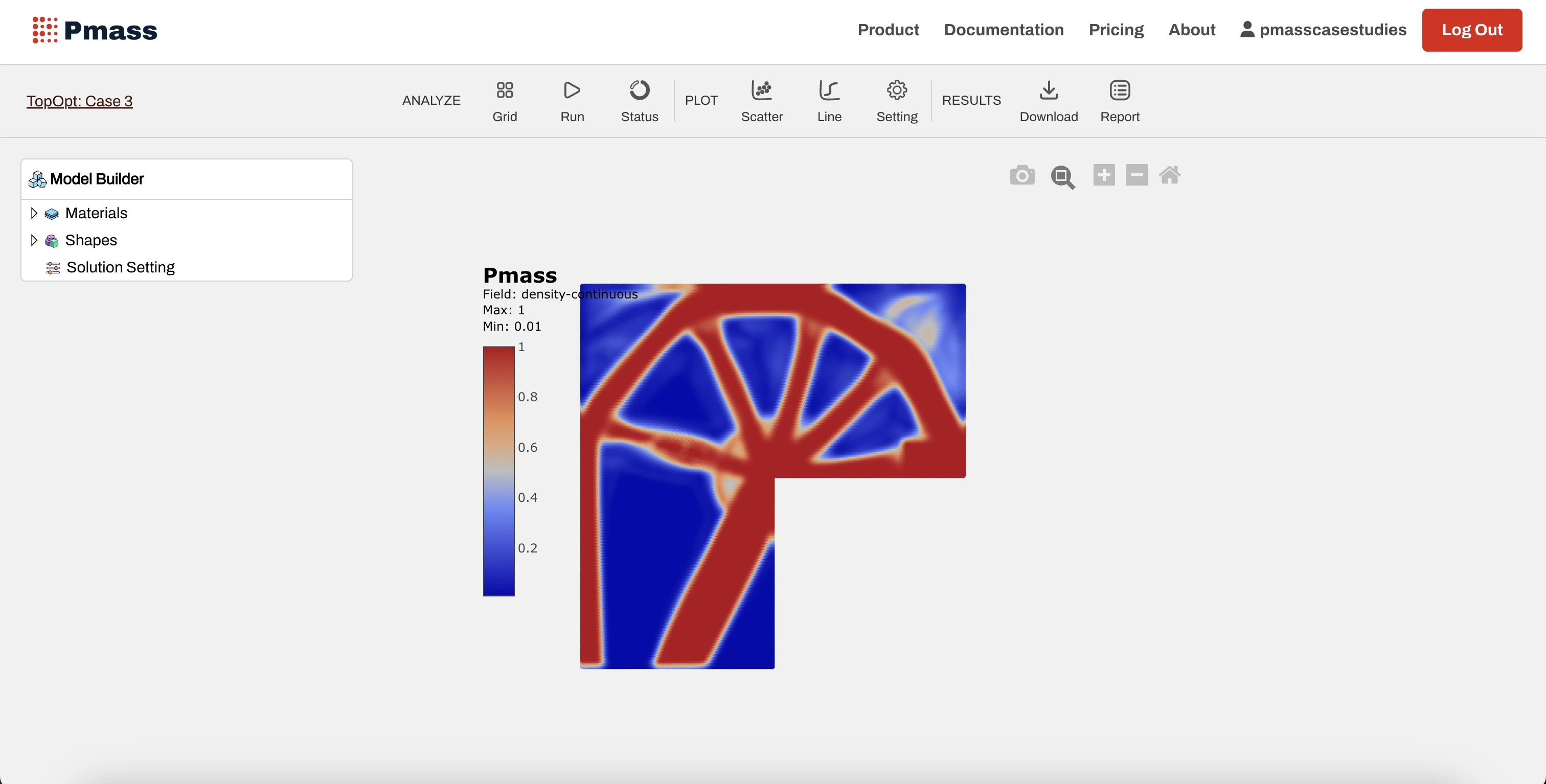
Pmass brings a novel approach to topology optimization by incorporating peridynamics to handle discontinuities, voids, and cracks during the optimization process. This allows for the design of robust and lightweight structures that are not only optimized for performance but also resilient to damage and failure. Optimized topologies can be directly used for further fracture analysis within the same simulation workflow.
Unit Cell Homogenization
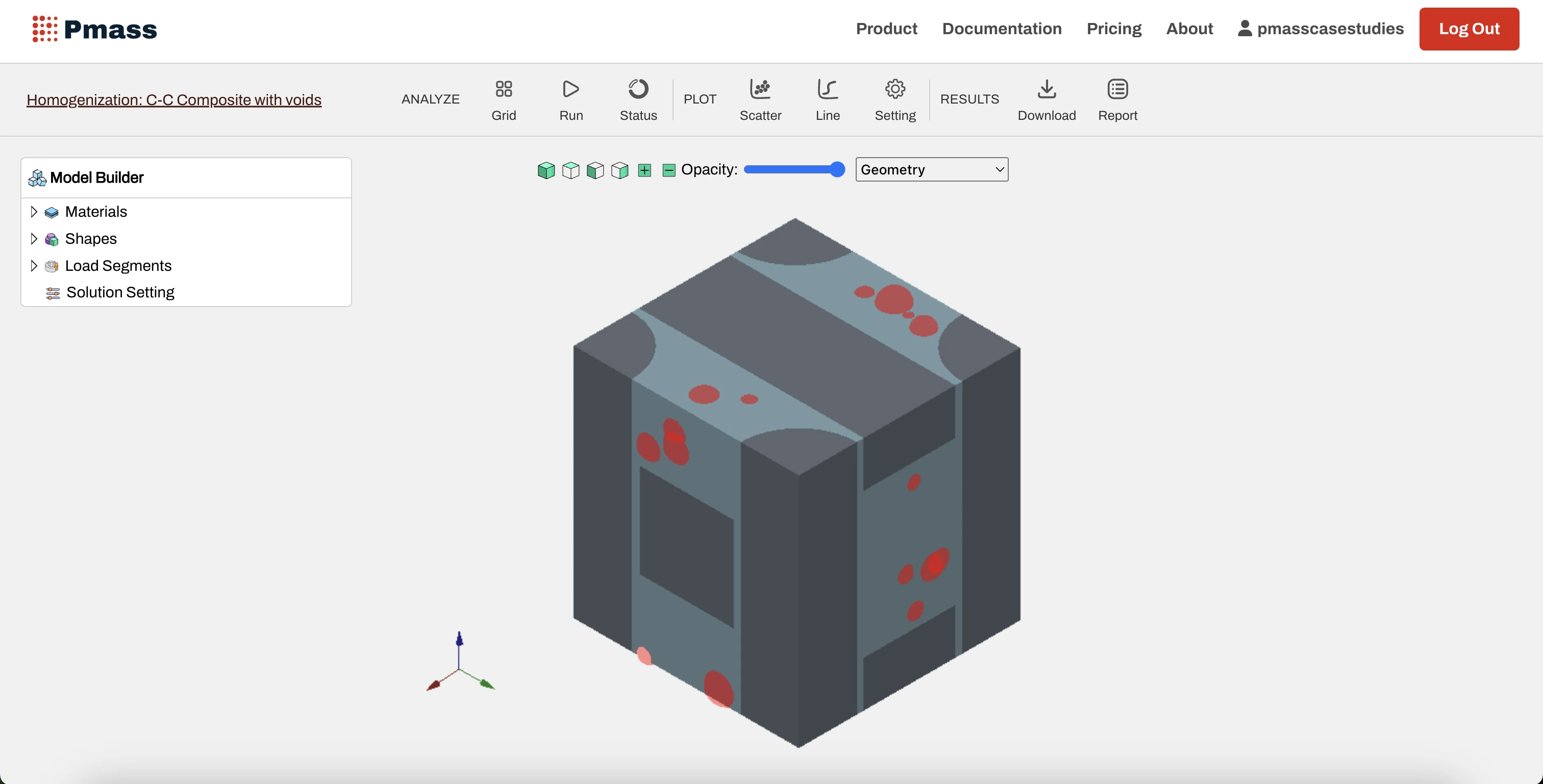
Pmass includes a dedicated tool for homogenizing the effective mechanical properties of microstructured unit cells. This feature is ideal for analyzing periodic lattice materials or composites, especially those with micro-cracks or interface debonding. The output includes a full stiffness matrix and orthotropic properties for use in macroscale simulations, ensuring accurate multiscale modeling of advanced materials.
Features

Model builder
Pmass's embedded Model Builder allows for the creation of complex 2D and 3D geometries, enabling the modeling of intricate engineering parts. Users can also embed various voids, cracks, and inclusions within these geometries.

Grid Generator
Pmass's interactive Grid Generator tool enables model discretization into peridynamic points with customizable spacing. Various point placements are available, including quadrilateral (2D-3D), circular (2D), spherical, and cylindrical (3D). Pmass also offers multiple options for defining the family of a given peridynamic point.
Parallel Processing
Pmass engine is developed in C++ environment, and supports parallel processing using OpenMP. For larger projects, Pmass users can choose a AWS EC2 instance with higher number of cores for faster simulation.

Data Backup
In Pmass, a copy of simulation results is created and maintined on AWS S3 buckets in order to protect data against loss and corruption.

Post Processing
Pmass's embedded post-processing tool allows users to visualize the simulation results using scatter and line plots. In addition, users can download the simulation results as text files, so that other post-processing tools can used to visulize the results.

Team Collaboration
Pmass allows team members to share their projects under various access permission levels. Team members can access project information and collaborate from anywhere with an internet connection.
Benefits

Easy to Use
- Easily create 2D/3D models online using embedded Model Builder, or import a CAD model or FE mesh.
- Discretize using Grid Generator, and solve in the cloud.

100% Online
- Access from any device in any location.
- A standard web browser and an internet connection are all you need!
- No software installation, no hardware infrastructure.

Flexible Collaboration
- Share your analysis with others.
- Work together with your teammates and partners.
- Set access permission level.

Stay Updated
- All software updates are automated.
- Use the latest version always.
- Choose your plan based on your requirements.

Based on NOSB-PD
- Pmass is built on the most general form of peridynamics, non-ordinary state-based peridynamics (NOSB-PD).
Unified Formulation
- Material damage is an inherent feature in Pmass, thus modeling of fracture initiation and propagation with arbitrary paths is permitted without the need for a crack growth treatment.

Classical constitutive Models
- Pmass allows the use of constitutive and damage models from the classical mechanics theory.
Complex Cracking
- Pmass allows consideration of highly heterogeneous material constituents and highly complex cracking mechanism.
Security

Secured Password
Your password is securely stored as a salted hash, ensuring that it is extremely difficult for unauthorized parties to access even if they gain entry to our database. Rest assured, we adhere strictly to our terms and conditions, which explicitly prohibit the sale, trade, or disclosure of your simulation data.

Encrypted Simulation Data
We employ encrypted hard drives located in external data centers to uphold top-tier data security standards. Security lies at the core of Pmass's principles, with a dedicated team solely dedicated to safeguarding data and platform integrity.